
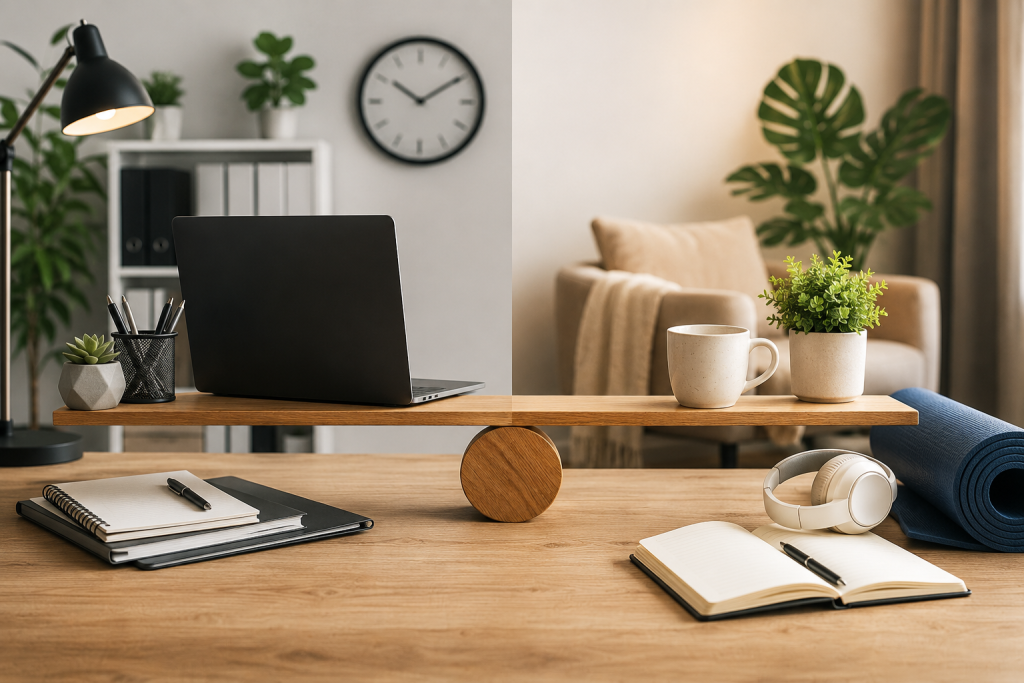
Ways to Improve Your Work-Life Balance
Work can easily take over your day if you let it. Emails arrive after office hours. Meetings run late. Your personal time starts to disappear.
A healthy work-life balance is not about working less. It is about making sure your work supports your life instead of controlling it. When you create clear boundaries and prioritize your well-being, you become more productive, less stressed, and more present in every area of your life.
Why Work-Life Balance Matters
Maintaining a healthy balance between work and personal life can:
- Reduce stress and burnout.
- Improve physical and mental health.
- Increase focus and productivity.
- Strengthen relationships.
- Give you more energy throughout the day.
- Improve overall happiness.
Small, consistent changes often make the biggest difference.
1. Set Clear Working Hours
Decide when your workday starts and ends.
Avoid checking emails or responding to messages once you’ve finished work unless it’s truly urgent.
Respecting your own boundaries encourages others to respect them too.
2. Prioritize Your Most Important Tasks
Start each day by identifying your top three priorities.
Focus on completing meaningful work before moving on to smaller tasks.
This helps you avoid feeling busy without making progress.
3. Learn to Say No
You don’t have to accept every meeting, request, or extra responsibility.
If your schedule is already full, politely decline or suggest another timeline.
Protecting your time is part of protecting your well-being.
4. Take Regular Breaks
Working continuously for hours reduces concentration.
Stand up.
Stretch.
Walk around.
Step outside for fresh air.
Even a five-minute break can improve your focus.
5. Disconnect After Work
Your personal time deserves your full attention.
Turn off work notifications.
Avoid opening work apps during dinner or family time.
Give your mind space to recharge.
6. Make Time for Exercise
Physical activity improves both your physical and mental health.
You don’t need an intense workout.
A 30-minute walk, cycling, yoga, or light stretching can help reduce stress and increase energy.
7. Schedule Personal Time
Treat your personal activities as seriously as your meetings.
Schedule time for:
- Family
- Friends
- Reading
- Hobbies
- Rest
- Personal development
If it’s on your calendar, you’re more likely to protect it.
8. Create a Dedicated Workspace
If you work remotely, separate your workspace from your relaxation space.
A dedicated work area helps your brain switch between work mode and personal mode.
9. Practice Mindfulness
Spend a few minutes each day slowing down.
Take deep breaths.
Meditate.
Write in a journal.
Practice gratitude.
These habits reduce stress and improve emotional resilience.
10. Accept That Balance Changes
Some weeks will require more work.
Others will allow more personal time.
The goal isn’t perfect balance every day.
The goal is making sure one area doesn’t constantly consume the other.
Signs Your Work-Life Balance Needs Attention
You may need to make changes if you:
- Feel exhausted most days.
- Regularly skip meals or sleep.
- Have little time for family or friends.
- Think about work constantly.
- Feel guilty when taking time off.
- Lose interest in hobbies you once enjoyed.
Recognizing these signs early can help prevent burnout.
Final Thoughts
Improving your work-life balance doesn’t require a complete lifestyle overhaul.
Start with one habit.
Finish work on time.
Take a proper lunch break.
Go for an evening walk.
Turn off work notifications before bed.
Over time, these small changes create a healthier relationship with work and leave more room for the people, experiences, and moments that truly matter.