
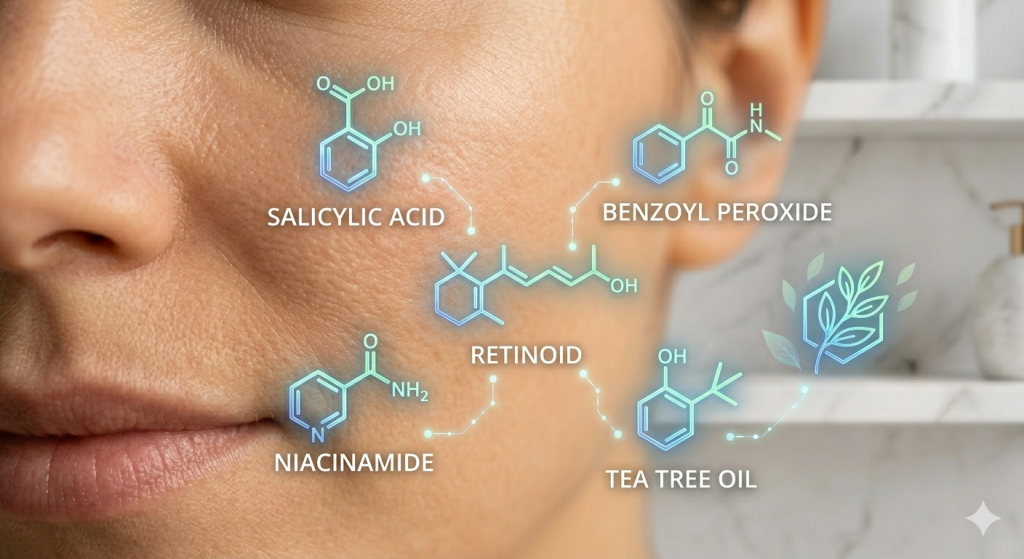
Dealing with acne-prone skin can feel like a constant guessing game. With hundreds of products on the shelves, the secret to clearing breakouts isn’t finding a miracle brand—it’s understanding the specific active ingredients inside the bottle.
Acne forms due to a combination of excess oil (sebum), clogged pores, bacteria, and inflammation. To target these issues effectively, look for these five powerhouse ingredients backed by dermatologists.
1. Salicylic Acid (BHA)
If you struggle with blackheads, whiteheads, or bumpy skin texture, Salicylic Acid is your gold standard.
-
How it works: Unlike Alpha Hydroxy Acids (AHAs) which only sit on the surface of your skin, Salicylic Acid is oil-soluble. This unique trait allows it to dive deep inside your pores to dissolve the sticky mix of sebum and dead skin cells that cause blockages.
-
Best for: Unclogging pores, smoothing skin texture, and preventing new acne from forming.
2. Benzoyl Peroxide
While Salicylic Acid cleans out the pore, Benzoyl Peroxide goes after the actual root cause of inflammatory acne: bacteria.
-
How it works: It introduces oxygen into the pores, which instantly kills Cutibacterium acnes (the bacteria responsible for angry, red pimples). It also helps reduce swelling and calms active, painful blemishes.
-
Best for: Red, pus-filled pimples and cystic acne flares.
3. Retinoids (Adapalene or Retinol)
Retinoids are derivatives of Vitamin A and serve as the ultimate long-term preventative strategy for clear skin.
-
How it works: Retinoids speed up cellular turnover. Essentially, they teach your skin cells to shed more efficiently so they don’t get trapped inside your pores. As a major bonus, they also speed up the healing process for the dark spots left behind after a pimple heals.
-
Best for: Preventing chronic breakouts and fading post-acne marks (hyperpigmentation).
4. Niacinamide (Vitamin B3)
Acne treatments can sometimes be drying or irritating. Niacinamide is the perfect team player because it calms the skin while regulating oil production.
-
How it works: It is a potent anti-inflammatory agent that strengthens your skin’s natural moisture barrier, reduces excess sebum production, and visibly shrinks the appearance of enlarged pores.
-
Best for: Reducing redness, controlling oily t-zones, and soothing irritation from harsher acne treatments.
5. Tea Tree Oil
If you prefer a natural alternative that still delivers clinical results, tea tree oil is an excellent choice.
-
How it works: It possesses natural antimicrobial and anti-inflammatory properties. Studies show that a 5% concentration of tea tree oil can be just as effective at treating acne as a 5% concentration of benzoyl peroxide, but often with significantly fewer side effects like peeling or burning.
-
Best for: Mild to moderate breakouts and gentle spot-treating.
How to Mix and Match Safely
To avoid destroying your skin barrier, never introduce all of these ingredients at once.
-
A simple, effective routine: Use a Salicylic Acid cleanser or Niacinamide serum in the morning, and apply your Retinoid or Benzoyl Peroxide treatment at night. Always follow up with a lightweight, oil-free moisturizer!